Abstract
Judging from the current industry trends, high performance water electret masterbatch (WEMB) has been recognized by many customers, and in the foreseeable future, it will seize part of the market share of glass fiber based filters. By analyzing the material properties and the manufacturing process, we can know that all these properties obtained by WEMB based meltblown nonwoven are mainly generated by these two aspects. Let’s take a closer look at these benefits of water electret masterbatch in detail, in addition, we will introduce to you the more desirable benefits offered by our EP-6 products.
If you’re wondering where did all these great performances come from? This article will reveal the answer for you.
Brief: the significance of meltblown nonwovens in various industries
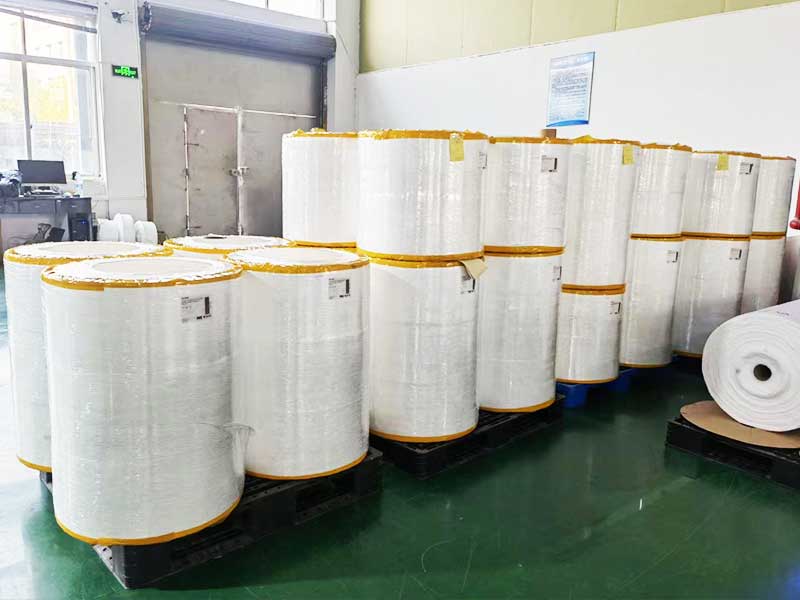
Meltblown nonwovens are versatile materials widely used in different industries for their unique properties such as filtration efficiency, barrier protection, insulation and sound absorption. They are designed to create a highly clean environment and thus provide reliable environmental support for high-precision and high-standard industries or products.
One of the primary areas where meltblown nonwovens find extensive use is in the field of filtration. These fabrics exhibit excellent particle capturing capabilities, making them ideal for air and liquid filtration applications. They effectively trap microscopic particles, such as dust, pollutants, and allergens, ensuring cleaner and healthier environments. Meltblown nonwovens are utilized in air purifiers, HVAC systems, face masks, and various filtration systems across industries, providing enhanced filtration efficiency and improved air quality.
Another industry that heavily relies on meltblown nonwovens is healthcare and hygiene. These fabrics are widely used in the production of disposable medical products, including surgical masks, gowns, and drapes.
The automotive industry also benefits greatly from the use of meltblown nonwovens. These fabrics are incorporated in various automotive components to enhance performance and comfort. They are used as sound-absorbing materials to reduce noise, as insulation for temperature control, and as filtration media for air and liquid filtration in vehicle systems.
Additionally, meltblown nonwovens have applications in the construction industry. They are utilized as insulation materials to enhance thermal and acoustic properties of buildings. Meltblown nonwovens can be found in wall insulation, roofing materials, and soundproofing systems, contributing to energy efficiency and noise reduction. Their lightweight nature, coupled with excellent insulation capabilities, makes them an ideal choice for construction projects.
The significance of meltblown nonwovens extends to other sectors as well, including agriculture, packaging, electronics, and more. In agriculture, these fabrics are used for crop protection, soil stabilization, and weed control.
In fact, meltblown nonwovens are used in many different industries, they’re all around us, you maybe just don’t notice yet.
Understanding Water Electret Masterbatch
Water Electret Masterbatch is a novel type of electret masterbatch. To learn about WEMB, let’s take a quick look at electret masterbatch (EMB).
Electret masterbatch and its role in enhancing nonwoven properties
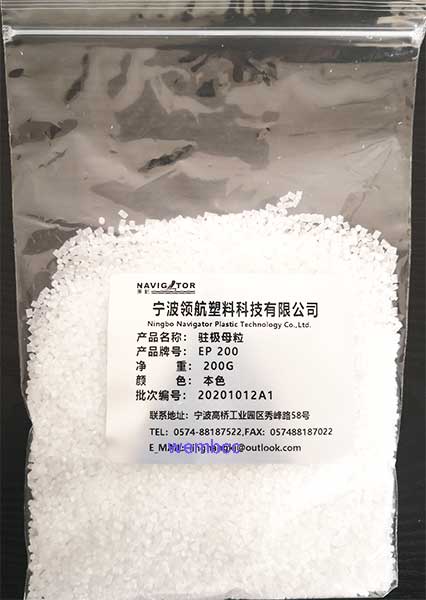
What is Electret masterbatch? EMB is a specialized additive that plays a crucial role in enhancing the properties of nonwoven materials. It is typically added to the manufacturing process of meltblown nonwovens during the extrusion stage. It contains a high concentration of electrostatically active components that store electrical charges for the fibers of nonwovens. These charges create an electret effect, resulting in strong electric field force effect, which can significantly improve the performance of nonwoven fabrics in trapping microscopic particles. This enhanced static charge property is beneficial for numerous applications.
One of the primary roles of electret masterbatch is to improve the filtration efficiency of nonwoven materials. By incorporating electrostatic charges, the nonwoven fabric becomes more effective at capturing and retaining particles, such as dust, allergens, microorganisms and viruses. This makes electret-based meltblown nonwovens highly desirable for air and liquid filtration applications, as they can achieve higher filtration efficiencies and provide cleaner environments.
The shortcomings of electret masterbatch
The root of EMB’s magical effects is its electrostatic storage capacity, while EMB’s shortcomings are also rooted in its electrostatic storage capacity.
EMB based meltblown nonwovens are typically charged by the corona discharge method. This corona discharge method is to pass the meltblown nonwoven fabrics through a high-voltage electric field to generate and capture charges in the electret masterbatches. However, the electrostatic charges generated by this method exist only on the surface of the fiber. This surface charge distribution can lead to a weaker electric field force and faster decay.
Firstly, the weaker electric field force result in lower filtration efficiency.
When the charges are confined to the surface of the fibers, their interaction with particles during the filtration process may be limited. The weaker electric field force resulting from the surface charge distribution reduces the attractive forces between the particles and the fibers, leading to a lower filtration efficiency. As test data show that the air filtration efficiency of EMB based melt blown nonwovens is only about 96%, while the air filtration efficiency of Water Electret Masterbatch based melt blown nonwovens is higher than 99%.
Secondly, the faster decay result in shorter storage time.
The charges on the surface of the fibers can decay relatively quickly over time. This means that the stored charges gradually dissipate, leading to a decrease in the overall charge stability and storage time of the material. The decay of charges in EMB-based materials can occur due to various factors such as environmental conditions, humidity, temperature, and exposure to contaminants. As the charges decay, the electric field force weakens, which can impact the filtration efficiency and performance of the nonwoven material. In about 2.5 years, these fabrics will no longer carry electrostatic charges.
These shortcomings make EMB based meltblown nonwovens unable to meet the increasing demand for high performance filter materials. This is where the introduction of Water Electret Masterbatch becomes important.
Overview of the water electret charging process and its advantages over traditional methods
Different from electret masterbatch and high voltage charging technology, water electret masterbatch is a special type of electret masterbatch that uses water electret charging technology to generate and capture charges in the fibers, which significantly enhancing electret performance. (For more info, please go to: What is Water Electret Masterbatch?)
In the production process of WEMB based meltblown nonwovens, deionized water is injected under high pressure and high speed to cause friction between the water and the fibers. Charges generated by friction are more easily captured by high-potential interface traps within the material, forming so-called deep trap charges. These charges are trapped inside fibers, unlike the charges obtained by corona charging which are only exist on the surface of fibers.
In addition, better pore size and porosity is observed. When the high pressure water stream passes through the meltblown nonwovens, the high pressure forces the water through tiny pores, causing the fabric’s fibers to stretch and reorder. This process leads to the formation of ultra-fine fibers that intertwine and entangle with each other, created better pores and voids.
And moreover, after charging, the meltblown nonwoven fabrics would be dried with hot air to complete the production. Do you know what that means? That means during the production process of WEMB based meltblown nonwovens, the fabrics have overcome the challenges of high humidity and high temperature and their quality remains excellent.
As you can see, these deep trap charges along with better pores and voids bring great improvments to the final meltblown nonwovens. Starting from this root, let us dig deeper into the beneficial changes that WEMB brings to meltblown nonwovens compared to EMB based meltblown nonwovens.
Benefits of water electret masterbatch? High quality melt blown cloth is the answer
From the above description, we can know that compared with the meltblown nonwoven fabrics based on EMB material, the meltblown nonwovens using WEMB as the raw material has much better electrostatic stability. And we also know that in the process of producing WEMB-based melt-blown non-wovens, high-pressure and high-speed water flows through the fabrics. Starting from these two points, let’s see what benefits that WEMB brings to meltblown nonwovens.
Enhanced charge stability
As described above in this article.
Improved filtration efficiency
Water electret masterbatch based meltblown nonwovens exhibit remarkable filtration efficiency compared to traditional electret masterbatch based fabrics. The deep trapping of charges in WEMB-based meltblown nonwovens allows for efficient capture and retention of particles, leading to filtration efficiencies exceeding 99%. This makes WEMB based fabrics ideal for applications requiring high-performance filtration.
Better storage lifespan
With superior charge stability, WEMB based meltblown nonwovens offer extended storage times without compromising filtration efficiency. The deep trap charges remain intact, allowing the material to retain its electrostatic properties over long periods. This is particularly advantageous in industries where storage and transportation of nonwoven materials are involved. It’s reported that the storage time can be up to 10 years, and the fabric can still maintain its activity.
Amazing performance in challenging environments
WEMB based meltblown nonwovens maintain their filtration efficiency and electrostatic properties in high temperature and high humidity environments, providing reliable and consistent filtration performance. At 90° high temperature and in 90° humidity environment, the filtration efficiency of WEMB based fabrics is almost unaffected. Whether it’s elevated temperatures, humid climates, or other challenging conditions, WEMB ensures cleaner air, making it a superior choice for filtration applications across various industries.
Superior particles retention / Increased dust holding capacity
The superior particle retention capabilities, means increased dust holding capacity, due to the enhanced charge stability, and optimized porosity and pore size distribution. The deep trap charges efficiently entrap and immobilize particles, preventing them from escaping or being released back into the filter media. And while effectively capturing and retaining particles, the larger pores and better porosity act as airflow channels and particle storage chambers, minimizing the risk of particle breakthrough and enhancing particle retention.
Lower air resistance
The larger pore size and improved porosity result in lower air resistance. These pores and voids, as we mentioned, act as airflow channels. When air flows through a material with smaller pore sizes or poor porosity, it encounters more obstacles and encounters increased resistance. This resistance leads to higher pressure drop and hampers the flow of air through the material. On the other hand, materials with larger pore sizes and better porosity allow air to flow more freely, resulting in lower resistance and reduced pressure drop.
Better WEMB: Industry-leading improvements delivered by EP-6
As we said, WEMB brings better filtration efficiency and longer storage life to meltblown nonwovens. Those high quality melt blown cloth is the answer of benefits of water electret masterbatch. But that doesn’t represent the whole truth. The truth is that the industry is still evolving, and our EP-6 is leading the way in this wave of progress.
Macro-level facts
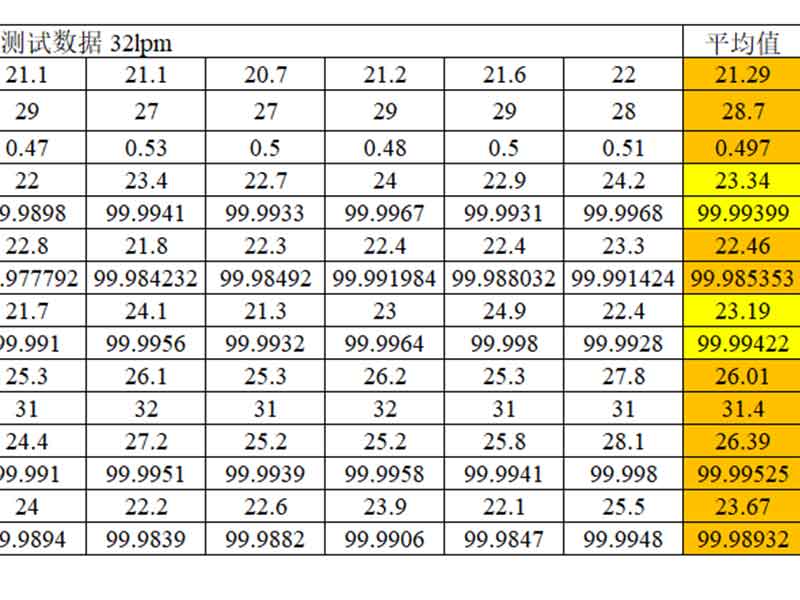
From a macro point of view, EP-6 based meltblown nonwovens have been measured to have consistently and outstandingly higher filtration efficiency.
Taking 10 groups as a round of testing, in 5 different rounds of testing, a total of 50 different sets of sample test data showed that:
- only one set of filtration efficiency was lower than 99.98%, which was 99.977792%
- the other 49 sets of data were all higher than 99.98%
- average values of these 5 rounds are: 99.99399%, 99.985353%, 99.99422%, 99.99525% and 99.98932%
Up to 99.99%! Judging from the numbers, our EP-6 has reached the threshold of H14.
Apart from such macro facts, let’s take a look at the amazing benefits that our ep6 brings from a micro perspective.
<image>>
Micro -level facts
From a micro point of view, when we delve into the beneficial chemical changes EP-6 brings to meltblown nonwoven fibers, you will understand why our material is leading the industry. Let’s go through these benefits one by one.
Better and higher Crystallinity
EP-6 showed better and higher crystallinity in meltblown fibers, which resulted in denser charge traps in the fibers, thus locking more electrostatic charges during the water electret charging process. It leads to significant advantages:
First, denser charge traps with denser charges lead to enhanced charge stability, allowing the fabric to maintain its electrostatic properties for a longer period of time. This means stable and robust charge storage and longer service life.
Second, denser charge traps with denser charges increase the probability of particle capture, thereby improving filtration performance. This is where the 99.99% filtration efficiency comes from.
Lower molecular weight, Lower viscosity performance
The lower molecular weight and lower viscosity of EP-6 makes it easier to handle and process during the production of meltblown nonwovens. It facilitates smooth flow and uniform dispersion of the material in the polypropylene (PP) melt, resulting in improved blending and integration with the base resin. This enhanced processability helps improve the efficiency and consistency of the production process.
It also promotes better fiber formation during the meltblown process, and, finer and more uniform fibers are essential for achieving optimal filtration efficiency and overall performance of the meltblown nonwovens.
Excellent Dispersion Performance
The excellent dispersion properties ensure that the water electret masterbatch additive is uniformly distributed in the meltblown PP resin during the production of meltblown nonwovens. This uniform dispersion allows for consistent and reliable binding of the raw material, which in turn contributes to a more uniform and controlled charge distribution within the material.
EP-6’s excellent dispersion helps ensure consistent quality of the final product. Uniform dispersion minimizes the risk of unstable changes in charge distribution, pore size and porosity, resulting in more reliable and predictable performance of meltblown nonwovens.
Microporous textures obtained
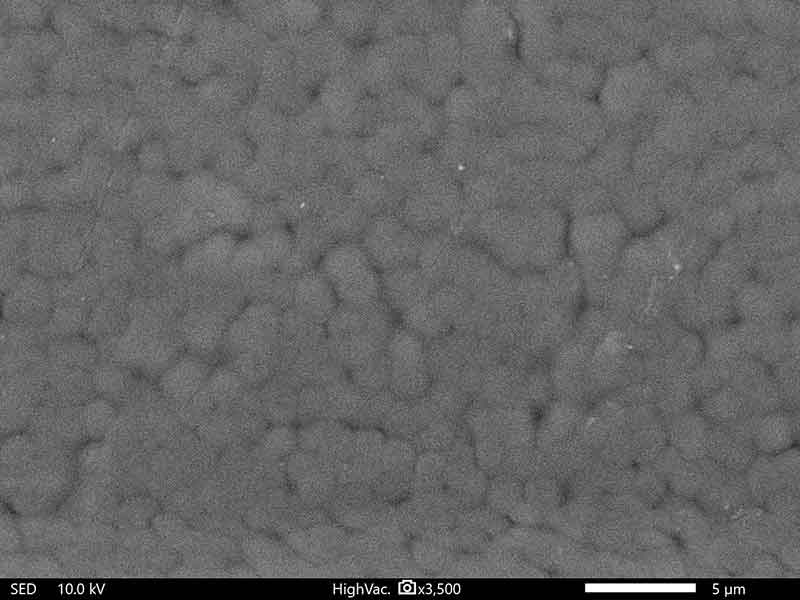
Microporous textures are the presence of tiny pores or openings on the surface of nonwoven fibers that can be clearly observed under scanning electron microscopy (SEM) at 3500x. These microporous textures are formed by blending EP-6 into the raw material during the manufacturing process.
The microporous textures create additional surface areas on the fibers, and these increased surface areas enhance the fabric’s ability to trap and hold more dust. These microporous textures also help to better intercept airborne particles. As dust-carrying air passes through the fabric, the microporous structure creates additional barriers that promote the interception and capture of particles, preventing them from passing through the material.
With the help of EP-6
With the help of EP-6, we have achieved the following results:
- H13 level filtration efficiency at over 99.98%
- extremely low air resistance at about 23 Pa
- finer fiber diameter that <2.2 μm (avg.)
- more uniform fibers in resulting fabrics
- great volatility that <0.15%MC
Hope you would love our EP-6 too, if you’re interest in our WEMB products, contact and ask for free samples, here is our FREE SAMPLES page.
Conclusion: Looking into the future
The research and development of WEMB materials is continuously developing with the aim of further improving the properties of this material and expanding its application potential. To further increase charge storage capacity, improve durability and longevity or fine-tune the filtration efficiency of WEMB-based meltblown nonwovens, WEMB is the material for the future.
Overall, the water electret masterbatch technology has significantly advanced the capabilities of meltblown nonwovens, providing innovative solutions for various industries. These properties are including enhanced filtration efficiency, charge stability, dust holding capacity, lower air resistance, and longer service life. These remarkable features and benefits of water electret masterbatch make those new WEMB based meltblown nonwoven materials the first choice for high-performance filtration and other critical applications, driving progress and innovation in these fields.
You and you can find out more in this Paper on why you should switch from electret masterbatches to water electret masterbatches.
And finally, we welcome your inquiries. Please believe that we will be your best water electret masterbatch supplier. Looking forward to hearing from you!
One more thing, we can provide 5KG of Free Samples for you to do production testing, lol.