With more focus on air quality, meltblown makers need to understand high efficiency filtration ratings. But the differences between standards like HEPA, ULPA, H13, H14 and U15 can be confusing.
This article explains these ratings in an easy, straightforward way. We’ll clarify exactly what each one means and the minimum efficiency needed to meet it. Whether making HVAC filters, face masks, or highly filtered materials, you’ll better grasp performance targets.
For those using electret additives, we’ll share how levels like H13 can be achieved with the right hydro electret masterbatch.
Our goal is a simple guide to these markings so manufacturers can confidently pick and specify materials. By making it crystal clear, we aim to remove the complexity. This will provide helpful clarity on this important topic.
Let’s get straightforward to these specific topics. (FYI: For more detailed and accurate information, please consult relevant standard experts.)

What is EPA, HEPA and ULPA?
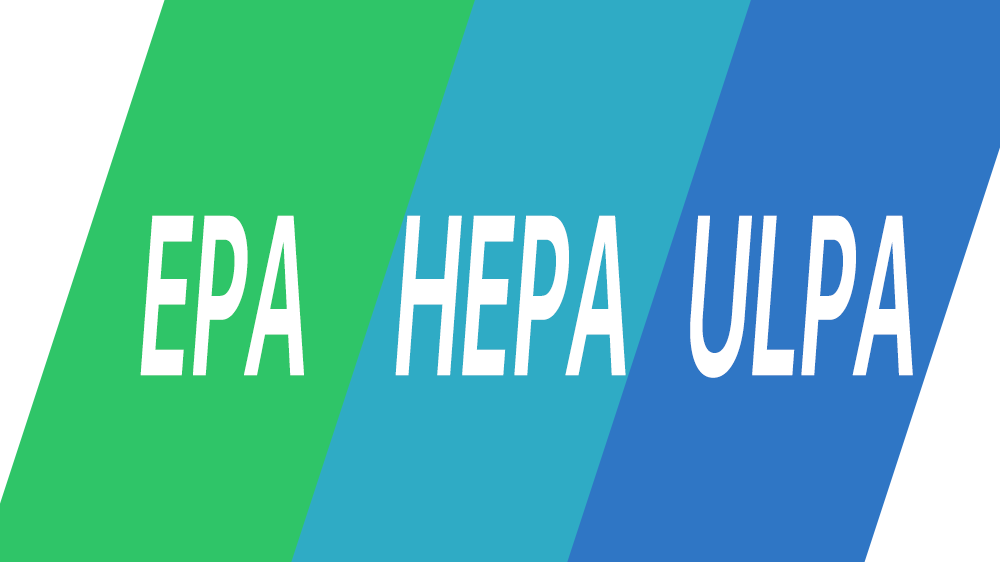
EPA, HEPA and ULPA are different classes of air filters that can capture different sizes and percentages of particles. They are defined by the ISO 29463 standard and the EN 1822 standard.
EPA stands for Efficient Particulate Air filter. It is the lowest class of filters and can capture at least 85% of particles that are 0.3 μm or larger in size.
HEPA stands for High Efficiency Particulate Air filter. It is the middle class of filters and can capture at least 99.95% of particles that are 0.3 μm or larger in size.
ULPA stands for Ultra Low Penetration Air filter. It is the highest class of filters and can capture at least 99.999% of particles that are 0.12 μm or larger in size.
The ISO 29463 standard also divides each class into sub-classes based on the minimum efficiency and maximum penetration rates of the filters. For example, EPA filters can be classified as E10, E11 or E12; HEPA filters can be classified as H13 or H14; and ULPA filters can be classified as U15, U16 or U17.
The ISO 29463 standard also specifies the testing methods and procedures for determining the performance of the filters. The testing methods include the particle counting method, the scan method, the oil thread method and the photometer method.
What is E10, E11, E12, H13, H14, U15, U16 and U17?
E10, E11, E12, H13, H14, U15, U16 and U17 are the sub-classes of EPA, HEPA and ULPA filters according to the ISO 29463 standard. They are based on the minimum efficiency and maximum penetration rates of the filters at the most penetrating particle size (MPPS).
The MPPS is the size of the particle that is most difficult for the filter to capture. It varies depending on the type and design of the filter, but it is usually between 0.1 μm and 0.3 μm.
The minimum efficiency and maximum penetration rates of each sub-class are as follows:
| Sub-class | Minimum efficiency | Maximum penetration |
|---|---|---|
| E10 | 85% | 15% |
| E11 | 95% | 5% |
| E12 | 99.5% | 0.5% |
| H13 | 99.95% | 0.05% |
| H14 | 99.995% | 0.005% |
| U15 | 99.9995% | 0.0005% |
| U16 | 99.99995% | 0.00005% |
| U17 | 99.999995% | 0.000005% |
For example, an E10 filter can capture at least 85% of particles at the MPPS, while an H14 filter can capture at least 99.995% of particles at the MPPS.
What kind of particles are include in MPPS?
MPPS means the size of the smallest particles that can get through the filter. Different filters have different MPPS sizes, but they are usually between 0.1 μm and 0.3 μm.
The particles in the MPPS range are very tiny and can be solid or liquid. They can come from dust, smoke, pollen, germs, viruses, sprays, or other sources. The MPPS particles are hard for the filter to catch because they are too small to be stuck by the filter material, but too big to be bounced by the air molecules.
The ISO 29463 standard and the EN 1822 standard use different ways to test the MPPS of the filters. The ISO 29463 standard uses oil droplets as the test particles, while the EN 1822 standard uses salt crystals as the test particles. Both tests use particles that have different sizes around the MPPS range.
What types of particles can a EPA/HEPA/ULPA filters capture?
EPA, HEPA and ULPA filters can capture different sizes and percentages of particles that are in the air. The higher the class of the filter, the smaller and more particles it can capture.
EPA filters can capture at least 85% of particles that are 0.3 μm or larger in size. These particles include dust, pollen, mold, and some bacteria.
HEPA filters can capture at least 99.95% of particles that are 0.3 μm or larger in size. These particles include dust, pollen, mold, bacteria, viruses, and other allergens or pollutants.
ULPA filters can capture at least 99.999% of particles that are 0.12 μm or larger in size. These particles include dust, pollen, mold, bacteria, viruses, and other very small particles that are hard to see.
However, none of these filters can capture gases, odors, or chemicals that are in the air. For these substances, a different type of filter is needed.
What is the collection mechanism EPA/HEPA/ULPA filters?
The primary collection mechanism of EPA, HEPA and ULPA filters is the sieving or straining effect. This means that the filter material has very small holes or pores that block the particles that are larger than the holes.
The sieving effect is most effective for particles that are much larger than the holes, such as dust, pollen, or mold. However, for particles that are similar or smaller than the holes, such as bacteria or viruses, the sieving effect is not enough.
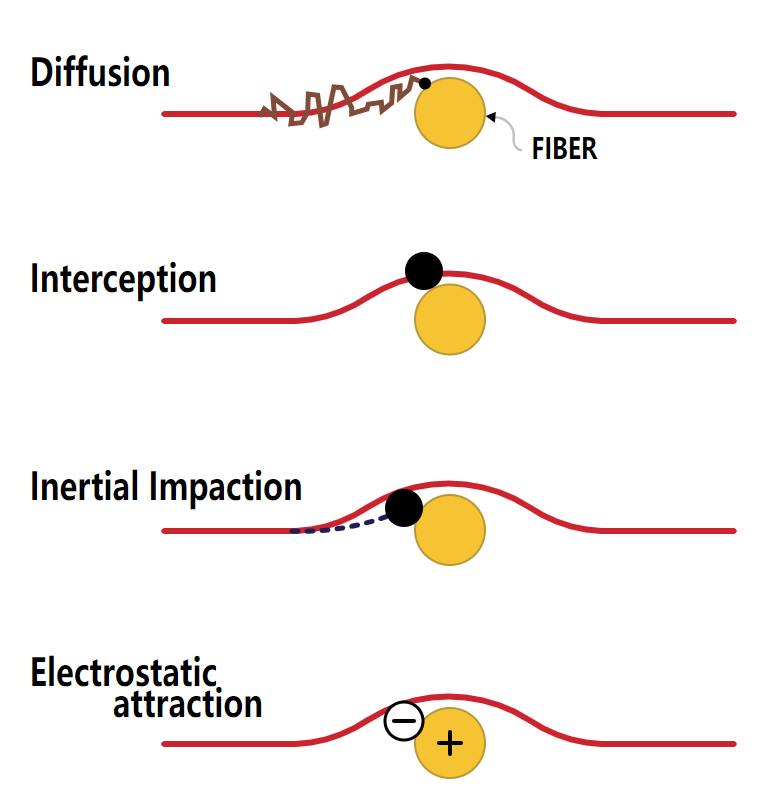
Therefore, EPA, HEPA and ULPA filters also rely on other collection mechanisms, such as impaction, interception, diffusion and electrostatic attraction. These mechanisms help to capture the smaller particles that can pass through the holes.
Impaction means that the particles hit the filter material and stick to it because of their inertia. Interception means that the particles touch the filter material and stick to it because of their shape. Diffusion means that the particles move randomly and stick to the filter material because of their collisions with air molecules. Electrostatic attraction means that the particles are attracted and stick to the filter material because of their electric charge.
The combination of these collection mechanisms makes EPA, HEPA and ULPA filters very efficient at capturing different sizes and types of particles.
What is the difference between US standard and ISO/EN standard?
FYI: For more detailed and accurate information, please consult relevant standard experts.
The EPA of US is not a filter class, but a regulatory agency that sets emission standards for air pollutants from various sources. The EPA of ISO/EN is a filter class that stands for Efficient Particulate Air, and it has three subclasses: E10, E11, and E12. The EPA filters of ISO/EN have a minimum overall efficiency of 85%, 95%, and 99.5% respectively for removing particles of 0.3 μm in diameter.
The HEPA of US is a filter class that stands for High Efficiency Particulate Air, and it has only one subclass: H13. The HEPA filter of US has a minimum overall efficiency of 99.97% for removing particles of 0.3 μm in diameter. The HEPA of ISO/EN is also a filter class that stands for High Efficiency Particulate Air, and it has four subclasses: H13, H14, U15, and U16. The HEPA filters of ISO/EN have a minimum overall efficiency of 99.95%, 99.995%, 99.9995%, and 99.99995% respectively for removing particles of 0.3 μm in diameter.
The ULPA of US is a filter class that stands for Ultra Low Penetration Air, and it has only one subclass: U17. The ULPA filter of US has a minimum overall efficiency of 99.999% for removing particles of 0.12 μm in diameter. The ULPA of ISO/EN is also a filter class that stands for Ultra Low Penetration Air, and it has three subclasses: U17, U18, and U19. The ULPA filters of ISO/EN have a minimum overall efficiency of 99.999%, 99.9999%, and 99.99999% respectively for removing particles of 0.12 μm in diameter.
Although there are differences between US and ISO/EN standard, the ISO standard is the international standard that is widely used and recognized by many countries and industries.
What should you do if you want to label your product as EPA/HEPA/ULPA or H13/H14/U15/U16/U17 compliant?
If you want to label your product as EPA/HEPA/ULPA or H13/H14/U15/U16/U17 compliant, you need to follow the standards and regulations of the country or region where you sell your product. Different countries or regions may have different requirements for testing and certifying air filters.
For example, in the US, you need to follow the DOE standard for HEPA filters, which requires that a HEPA filter must remove 99.97% of particles whose diameter is equal to 0.3 μm. You also need to follow the EPA regulations for air quality and emissions, which may vary depending on the source and type of air pollutants. There is no official ULPA standard in the US, but some manufacturers may use the IEST-RP-CC001 standard, which requires that a ULPA filter must remove 99.999% of particles whose diameter is equal to 0.12 μm.
In Europe, you need to follow the EN 1822 standard for EPA, HEPA and ULPA filters, which classifies them according to their overall efficiency and local efficiency for particles of different sizes (from 0.1 μm to 0.3 μm). You also need to follow the ISO 16890 standard for general ventilation air filters, which classifies them according to their efficiency for removing particulate matter (PM) of different sizes (from 0.1 μm to 10 μm). You need to mark your product with the filter class, the minimum overall efficiency, and the minimum local efficiency according to these standards.
What are the legal issues or payment terms of using this label?
The legal issues and payment terms for air filter labeling may depend on the country or region where you sell your product. You need to comply with the local laws and regulations for product labeling, which may vary depending on the type and purpose of your product. You also need to pay attention to the accuracy and validity of your claims, and avoid any misleading or false statements.
For example, in the UK, you need to follow the Consumer Protection from Unfair Trading Regulations 2008, which prohibit unfair commercial practices such as false or deceptive information, misleading omissions, aggressive sales techniques, etc.1 You also need to follow the specific rules for some products, such as food, cosmetics, electrical appliances, etc., which may require additional information or certification on the label1. You may need to pay fees or charges for some labels or certifications, such as the CE mark, the organic logo, the energy label, etc.1
You can find more information about the product labeling laws and payment terms in the UK from this source: Product labelling: the law – GOV.UK.
How levels like H13 can be achieved with the right hydro electret masterbatch?
Water electret masterbatch is a special additive that can improve the electrostatic performance of polypropylene melt-blown nonwovens, which are widely used for air filtration. By adding water electret masterbatch to the polypropylene resin before the melt-blown process, and then applying a high-voltage electric field to the nonwovens in a water bath, the nonwovens can acquire stable and uniform electric charges on their fibers. These charges can enhance the electrostatic attraction between the fibers and the airborne particles, thus increasing the filtration efficiency of the nonwovens.
With water electret masterbatch and hydro electret charging process, our customer’s final electret melt-blown nonwovens can achieve high levels of air filtration efficiency, which average rate is 99.99% that perfectly matching the H13 standard.
Water electret masterbatch and hydro electret charging process are innovative and effective solutions for producing high-performance air filters that can meet the increasing demand for clean and healthy air. Our company is proud to offer these solutions to our customers, and we are confident that we will soon reach the H14 level of air filtration efficiency with our products.
More useful links for your references
- HEPA – Wikipedia
- ISO 29463 – New standard for EPA, HEPA and ULPA filters
- Air filter classes / efficiency charts (MERV, ISO) : overview
- ISO 16890 – Air filtration standards for HVAC systems
- air quality – EU EN standard 1822 vs US HEPA filters
- Classification of air filters – Freudenberg Filtration Technologies
- ASHRAE Terminology
- ANSI/ASHRAE STANDARD 52.2 November 2014 Understanding MERV …
- Ventilation of Health Care Facilities
- Explained: DOE BTU SACC Vs ASHRAE In Portable AC Units
- The international test standard ISO 16890 for air filters for general …
- ISO 29463-1:2017(en), High efficiency filters and filter media for …
- What is a HEPA filter? | US EPA
- HEPA vs. ULPA Filtration: What’s the Difference?
- HEPA Filters and ULPA Filters Selection Guide: Types, Features …
- BS EN 1822-1:2019 High efficiency air filters (EPA, HEPA and ULPA …
- EN 1822 as test method for high efficiency air filters
- EPA, HEPA and ULPA Filters
- HACCP Planning: A Guide for Managing Contamination Risks in …