
Abstract
This FAQ page provides answers to frequently asked questions about water electret masterbatch (WEMB) and its application in the meltblown nonwovens industry. We try to make it cover everything from enhancing filtration efficiency, improving air resistance, extending service life and the water electret charging process. In addition, it covers issues related to production technology, equipment requirements, regulatory considerations and ongoing research efforts, as well as related questions. Most of these questions and answers come from our experience working with customers. Whether you are seeking information on WEMB, electret masterbatch (EMB), or exploring its suitability for a specific application, this Q&A page provides valuable information on the potential benefits and challenges associated with this WEMB material.
We will divide all questions and answers into several topics, which are shown in the content list below. Considering the readability of this page, we will only provide the jump links to these main topics, otherwise the content list will be too long, lol. You can search for specific questions and answers by using CTRL+F (win) or CMD+F (mac) shortcuts.
FYI, these questions are randomly ordered, not in order of importance. Because everyone’s questions may be different, there is no more important question thing; the only difference is whether the answer is helpful or not.
We will continue to update this page as we find useful and meaningful questions and answers. We hope it will be useful and helpful.
Issues about Water Electret Masterbatches and Electret Masterbatches
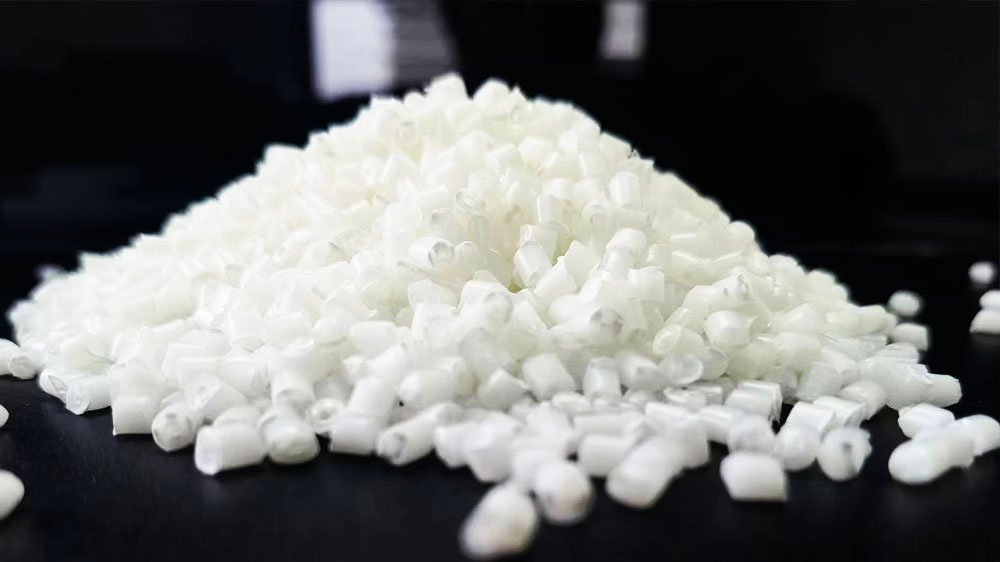
<Questions about water electret masterbatch, these white particles>
Q1: What is Electret Masterbatch (EMB)?
EMB is a specialized additive for polypropylene (PP) resin that plays a crucial role in enhancing the properties of nonwoven materials. It is typically added to the manufacturing process of meltblown nonwovens during the extrusion stage. It contains a high concentration of electrostatically active components that store electrical charges for the fibers of nonwovens. These charges create an electret effect, resulting in strong electric field force effect, which can significantly improve the performance of nonwoven fabrics in trapping microscopic particles.
Q2: What is Water Electret Masterbatch (WEMB)?
Water electret masterbatch is a special type of electret masterbatch that uses water electret charging technology to generate and capture charges in the fibers, which significantly improving electret performance and filtration efficiency of meltblown nonwovens
Q3: What is the difference between water electret masterbatch and electret masterbatch?
Water electret masterbatch is a novel kind of electret masterbatch that is charged using water-based electret charging techniques. The process involves using water to produce and stabilize the electric charge within the fibers. This new charging technique enhance the charge stability and longevity of the electret properties, therefore, the better melt-blown nonwovens.
When, on the other hand, traditional electret masterbatch is more general and including a broader range of charging techniques, such as corona charging, tribocharging, or other proprietary methods, depending on the specific manufacturing process and desired properties.
Q4: How does WEMB enhance the properties of meltblown nonwovens?
In the production process of WEMB based meltblown nonwovens, deionized water is injected under high pressure and high speed to cause friction between the water and the fibers. Charges generated by friction are more easily captured by high-potential interface traps within the material, forming so-called deep trap charges. Deep trap charges bring stable and strong electrostatic charges to the fabric, which enhance the performance of meltblown nonwovens.
Q5: What is the water electret charging process?
The water electret charging process involves the use of friction between water and fibers to create materials with enhanced electret properties, thereby giving the fibers stable and long-lasting electrical charges.
In the production process of WEMB based meltblown nonwovens, deionized water is injected under high pressure to cause friction between the water and the fibers, so that the fibers are charged with static electricity. After charging, the meltblown nonwoven fabric would be dried with hot air to complete the production. It’s called water electret charging method.
Q6: How does water electret charging differ from traditional methods?
Traditional methods, such as corona discharge, use high-voltage electricity to charge the fiber, and the charges are only trapped on the surface of the fiber, while the water electret charging method improves charge stability by charging deeper charge traps inside the material through friction method.
Q7: What are the advantages of using WEMB in meltblown nonwovens?
WEMB offers several advantages, including higher filtration efficiency, superior charge stability, enhanced dust holding capacity, lower air resistance, and longer service life compared to EMB.
Q8: Does WEMB improve filtration efficiency?
Yes, WEMB significantly improves filtration efficiency in meltblown nonwovens. It can achieve filtration rates at about 99%, surpassing the performance of EMB-based materials.
Q9: Can WEMB-based meltblown nonwovens achieve higher filtration rates?
EP-6 based meltblown nonwovens exhibit higher filtration efficiency of approximately 99.99%, and we are working on some improvements.
Q10: Can WEMB-based meltblown nonwovens withstand challenging environments, such as high temperatures and humidity?
In the case of 90℃ temperature and 90° humidity, it will hardly affect the performance of WEMB based meltblown nonwovens. At a higher temperature at 110℃, the filtration performance of WEMB based meltblown nonwovens is affected by less than 1%.
Q11: How can I determine if WEMB is suitable for my specific application?
The most important indicator is filtration efficiency. If you need up to 99% filtration efficiency, then WEMB is the choice you can make now. Moreover, WEMB material technology is still developing, and it is likely to reach a filtration efficiency of 99.9999% in the next three years. So are you investing in your future?
Issues about Productions and Processes
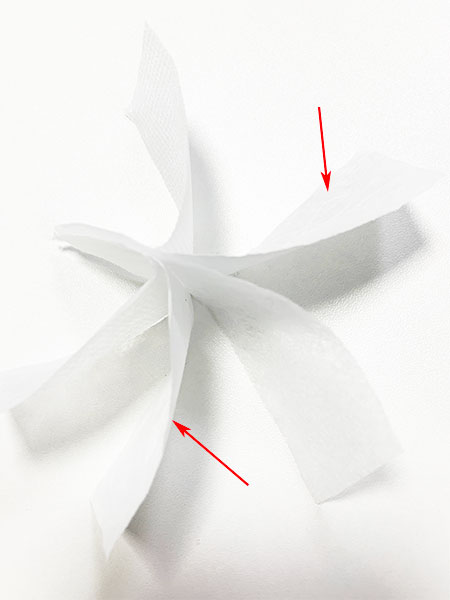
<Meltblown nonwovens in N95 masks>
Q1: Are there any regulatory approvals or certifications for WEMB-based materials?
This needs to be based on the laws and regulations of your region. WEMB is a non-toxic and harmless product. However, in your region, WEMB-based materials may still require regulatory approval and certification to ensure they meet industry standards and requirements, especially in medical and filtration applications. You can contact us for the MSDS file of EP-6.
Q2: Can the water electret charging process be integrated into existing EMB based meltblown nonwoven production lines?
Yes, the water electret charging process can be integrated into existing meltblown nonwoven production lines with proper modifications and additions to accommodate the charging step. You need to consult your charging equipment supplier for more details.
Q3: Are there any challenges or considerations when transitioning from EMB to WEMB?
Transitioning from EMB to WEMB based production line would involve equipment purchases or modifications, process adjustments, and acquiring the necessary expertise in the new process. But nothing can stop a brave heart, my friend.
Q4: Is WEMB cost-effective compared to EMB?
WEMB material is more expensive than EMB. However, the quality of melt-blown non-woven fabrics based on WEMB is far superior to those of EMB-based fabrics. Therefore, based on the market you are facing, it is recommended to conduct a comprehensive cost analysis for evaluation and decision-making.
Q5: Are there ongoing research efforts to further improve WEMB technology?
Our ongoing research efforts are focused on improving the performance of WEMB-based materials, such as charge stability, process efficiency and sustainability. Our next series of EP-x WEMB products will certainly result in filtration rates steadily higher than 99.99%. Stay tuned.
Q6: What is the recommended usage ratio of EP-6?
3% to 5%. The specific amount of addition is related to your requirements, equipments and processes. Before starting mass production, please conduct trials to determine the most appropriate addition ratio for you.
And finally, if you have any other questions that are not stated in this page, please feel free to contact us, our technical experts can answer your questions for you. Thank you.