This is an EP-6 product knowledge page, if you need to order our EP-6 series water electret masterbatches (WEMBs), you can visit here: EP-6. If you need a free sample for product production testing, you can go to: Free Samples.
Let’s dive in:
In the continuously advancing plastics industry, the pursuit of improved performance and efficiency spurs ongoing innovation. Electret masterbatches (EMBs) have emerged as a transformative technology for infusing plastics with enduring electrostatic charges. They play a vital role in applications demanding strong, lasting charges like air filtration fabrics and healthcare materials.
In this evolving landscape, a new innovation now challenges traditional electret masterbatches. Water electret masterbatches represent a pioneering advancement in nonwovens manufacturing. WEMBs use an innovative water-based production process to achieve higher initial charge levels and greater long-term charge stability compared to conventional masterbatches.
This article will examine the key differences between Water Electret Masterbatches vs Electret Masterbatches to help meltblown nonwoven manufacturers select the best option for their specific application requirements and production methods.
(For the convenience of writing, sometimes I use WEMB as WEMB-based meltblown nonwovens, please forgive my laziness, lol.)
1. Electret Masterbatch Basics
1.1 What are Electret Masterbatches?
EMBs are a specialized type of masterbatch used in the manufacturing of polymer materials, particularly in the context of meltblown nonwovens. They are based on polypropylene resin with ultra-high melt index and can effectively improve the short-term storage capacity of meltblown nonwovens. They can increase the retention of the applied electrical charges in the nonwoven fabric, which increases filtration efficiency through the electrostatically charged fibers capturing particulates by electrostatic attraction. They are designed to enhance the electrical properties of the material by introducing and retaining electric charges.
1.2 Role of Electret Masterbatches in the Meltblown Nonwoven Industry
In the meltblown nonwoven industry, Electret Masterbatches play a vital role in enhancing the performance of the materials. Meltblown nonwovens are widely used for their filtration efficiency, making them valuable in various applications like air and liquid filtration, medical and hygiene products, and more. EMBs significantly improve the filtration capabilities of these nonwovens by imparting an electrostatic charge to the fibers. The charged fibers attract and capture particles, providing higher filtration efficiency and better performance in removing contaminants and particulates from the environment.
1.3 Why EMBs are Widely Used as the Standard Electret
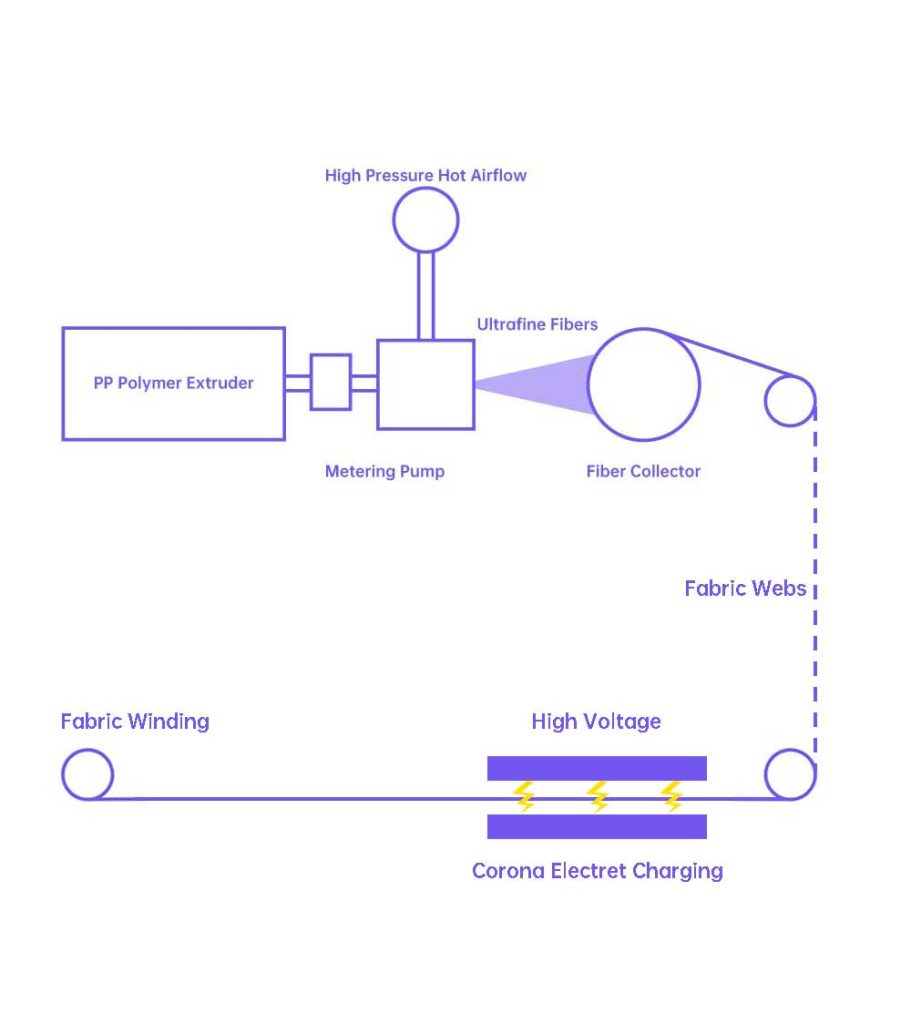
1.3.1 Corona Discharge Charging Process
The corona discharge charging process is the key reason why Electret Masterbatches are widely used as the standard electret material. In this method, the electret particles are subjected to a high-voltage electric field, causing them to acquire a positive or negative charge. This charge is then retained in the electret particles, even after the electric field is removed. The simplicity and efficiency of the corona discharge process make it a preferred choice for manufacturing Electret Masterbatches on a large scale. Additionally, the charged EMBs can be easily incorporated into the plastics during processing, allowing for a cost-effective and reliable method of enhancing plastic properties.
1.3.2 Cost-Effectiveness of EMBs
EMBs offer a cost-effective solution for enhancing plastic properties with electrostatic charges. The corona discharge method used to charge the electret particles is relatively simple and economical, making it attractive to manufacturers seeking to optimize production costs. With cost-effectiveness being a crucial consideration in the industry, Electret Masterbatches have gained widespread acceptance as the standard electret material. Manufacturers can achieve significant improvements in the performance of their plastic products without incurring substantial additional expenses, making EMBs a practical choice for a range of applications.
2. Water Electret Masterbatch Basics
Water Electret Masterbatches are innovative and advanced additives used in the meltblown nonwoven industry. Unlike traditional Electret Masterbatches, which use the corona discharge charging method, WEMBs utilize a cutting-edge water-based electret charging process. This new technology has been developed to address the limitations of EMBs and provide enhanced performance in nonwoven applications.
2.1 What are Water Electret Masterbatches?
WEMBs are specialized mixtures of electret particles dispersed within a polymer carrier matrix, similar to EMBs. However, the key difference lies in the way the electret particles are charged. WEMBs use a unique water electret charging (WEC) process, which involves high-pressure injection of pure water into the electret masterbatch. This process generates friction between the particles and the water, creating a stable electrostatic charge within the masterbatch.
2.2 The Water-Based Electret Charging Method
The water-based electret charging method used in WEMBs offers several advantages over the traditional corona discharge method. In the corona discharge process, electrical discharges generate charged particles that are then dispersed into the surface of carrier polymer. While effective, this method has limitations in maintaining long-term charge stability.
On the other hand, the water-based electret charging method used in WEMBs creates deep-trapped charges within the electret particles. These charges are more stable and long-lasting, providing a consistent and reliable electrostatic charge in the final meltblown nonwoven product. The water electret charging process is not only highly efficient but also environmentally friendly, as it does not rely on chemical additives or generate harmful byproducts.

2.3 WEMBs’ Superior Charge Levels and Stability
One of the key advantages of WEMBs is their ability to achieve higher initial charge levels compared to traditional EMBs. The deep-trapped charges created during the water electret charging process result in an electrostatic charge that is stronger and more resilient. This enhanced charge level contributes to improved filtration efficiency and particle capture, making WEMBs ideal for high-performance filtration applications.
Moreover, WEMBs exhibit superior charge stability, ensuring that the nonwoven fabric retains its electrostatic charge over extended periods of use or storage. This stability translates to consistent filtration performance, making WEMBs a reliable choice for critical applications where the maintenance of filtration efficiency is essential.
The combination of higher charge levels and prolonged charge stability makes WEMBs a compelling alternative to traditional EMBs, offering meltblown nonwoven manufacturers an advanced solution to meet the stringent demands of various industries.
3. Water Electret Masterbatches vs Electret Masterbatches: Key Differences
3.1 Charging Methods: Corona Discharge vs Water-Based Electret Charging
In the manufacturing process of Electret Masterbatches, the typical method employed is corona discharge. This technique involves subjecting the material to high-voltage electrodes, resulting in a buildup of electrostatic charge on the electret particles. On the other hand, Water Electret Masterbatches utilize a water-based electret charging process. In WEC, high-pressure pure water is injected into the meltblown nonwoven, creating friction that generates the electret charge. This method is more environmentally friendly and offers distinct advantages compared to the traditional corona discharge method.
3.2 Electrostatic Charge Levels and Performance Comparison
3.2.1 Higher and Longer-lasting Charge Levels in WEMB based fibers
One of the significant differences between Water Electret Masterbatches vs Electret Masterbatches lies in their electrostatic charge levels. WEMBs are known for providing stronger and longer-lasting charge levels in meltblown nonwoven fibers. The water-based electret charging process generates deep trapped charges, resulting in superior charge stability over time. This attribute ensures consistent electrostatic performance, even after prolonged storage periods. As a result, WEMBs offer increased efficiency and reliability in applications that demand a consistent electrostatic charge.
3.2.2 Better Air Filtration Efficiency with WEMB added
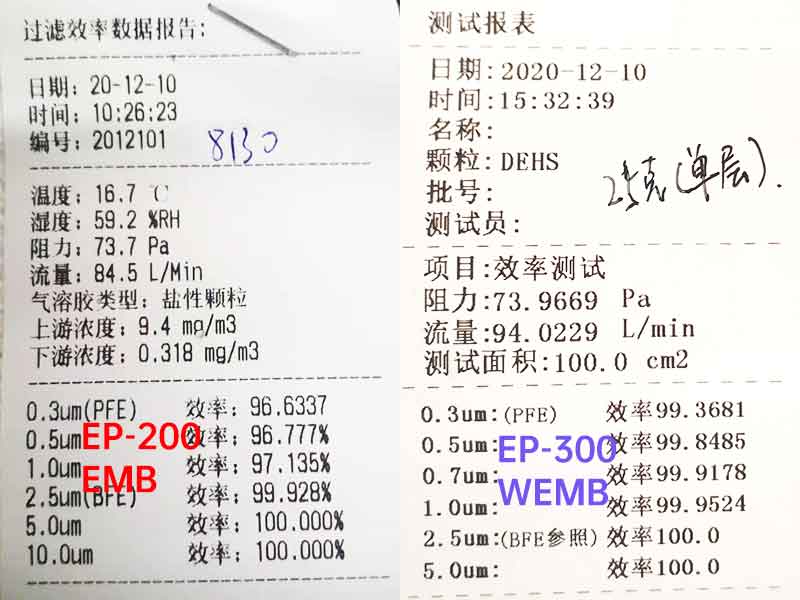
The higher and more prolonged charge levels achieved by WEMBs lead to improved air filtration efficiency. When incorporated into meltblown nonwovens, the charged fibers effectively attract and capture particles, including fine dust, allergens, and microorganisms. It can increase the air filtration efficiency from 96% (EMB added) to over 99.9% (WEMB added). This makes WEMB-based materials particularly suitable for applications requiring stringent air quality standards, such as air filters and respirators used in healthcare settings or industrial environments.
3.2.3 Lower air resistance with WEMB added
Additionally, WEMBs contribute to lower air resistance compared to traditional EMBs. The fiber diameter of meltblown nonwoven fabrics with the addition of wemb was less than 3 μm on average. This characteristic is highly desirable in applications where high air permeability is crucial, such as in air filters or masks. Lower air resistance allows for improved airflow, enhancing breathability and overall comfort for users.
3.2.4 Enhanced Dust Holding Capacity with WEMBs added
Moreover, WEMBs provide an enhanced dust holding capacity in meltblown nonwovens. The deep trapped charges generated during the water electret charging process create an effective trapping mechanism for particles, leading to increased dust holding capacity. This advantage ensures that the material can retain captured particles efficiently, leading to extended product lifespan and improved performance.
Overall, the key differences between Water Electret Masterbatches vs Electret Masterbatches lie in their charging methods and the resulting electrostatic properties. WEMBs offer higher and longer-lasting charge levels, better air filtration efficiency, lower air resistance, and enhanced dust holding capacity, making them a compelling choice for meltblown nonwoven manufacturers seeking optimal performance in their applications.
4. Water Electret Masterbatches vs Electret Masterbatches: Key Selecting Factors
4.1 Performance Requirements: Air Filtration Efficiency and Longer Storage Needs
4.1.1 Assessing Air Filtration Efficiency Requirements
To select the most suitable masterbatch for meltblown nonwovens, manufacturers must first evaluate their specific air filtration efficiency needs. Consider the target application and the level of filtration required to meet industry standards or regulations. Water Electret Masterbatches offer higher charge levels, which can lead to improved air filtration efficiency up to over 99.9% compared to traditional Electret Masterbatches’ 96%. Understanding the required filtration performance will help in determining the optimal masterbatch choice.
4.1.2 Addressing Longer Storage Needs
Another critical performance requirement is the ability of the electret-added meltblown nonwoven to maintain its charge stability over an extended storage period. WEMBs, with their enhanced charge retention capabilities, are well-suited for applications that demand longer storage or shelf life. Evaluating the desired storage duration will aid in making an informed decision on the appropriate masterbatch to achieve the desired performance.
4.2 Manufacturing Methods and Equipment Impact
4.2.1 Compatibility with Existing Manufacturing Equipment
Assessing the compatibility of the selected masterbatch with existing manufacturing equipment is vital to streamline the production process. Manufacturers need to consider whether their machinery can efficiently process the chosen Water Electret Masterbatch or Electret Masterbatch. Any potential modification or upgrade requirements should be evaluated to ensure a smooth integration of the selected masterbatch into the production process.
4.2.2 Impact on Manufacturing Process
The impact of the masterbatch on the overall manufacturing process should be carefully examined. This includes evaluating any changes in processing parameters, production rates, or product characteristics when using Water Electret Masterbatches or Electret Masterbatches. Understanding how the masterbatch choice affects the manufacturing process helps manufacturers optimize production efficiency and product quality.
4.3 Cost Considerations and Economic Feasibility
4.3.1 Cost Analysis: WEMBs vs. EMBs
Conducting a thorough cost analysis is crucial when choosing between Water Electret Masterbatches vs Electret Masterbatches. While WEMBs often offer superior charge levels and performance, they may come with a higher price tag compared to traditional EMBs. Manufacturers need to balance the performance benefits with the additional cost to determine the most economically feasible option for their specific applications.
4.3.2 Long-term Economic Benefits
In addition to upfront costs, manufacturers should consider the long-term economic benefits of the chosen masterbatch. Factors such as extended product lifespan, reduced maintenance requirements, and potential energy savings due to improved filtration efficiency can contribute to the overall cost-effectiveness of using WEMBs. Evaluating the long-term economic impact ensures a well-informed decision that aligns with both short-term and long-term financial goals.
4.4 Market-End Share and Growth Opportunities
4.4.1 Market Trends and End-User Preferences
Understanding the current market trends and end-user preferences is essential for meltblown nonwoven manufacturers. Market research can provide valuable insights into the demand for specific features, such as higher air filtration efficiency, enhanced charge stability, and improved dust holding capacity. Aligning the masterbatch selection with market preferences can lead to a competitive advantage and increased customer satisfaction.
4.4.2 Potential Growth Opportunities
Assessing the potential growth opportunities for both Water Electret Masterbatches and Electret Masterbatches is crucial for long-term business planning. Identifying emerging markets or industries that may benefit from the unique properties of WEMBs can open new avenues for business expansion. Being proactive in identifying growth opportunities ensures manufacturers stay ahead in a competitive market landscape.
Considering these key selecting factors allows meltblown nonwoven manufacturers to make a well-informed decision when choosing between Water Electret Masterbatches and Electret Masterbatches. Evaluating performance requirements, manufacturing impacts, cost considerations, and market trends will lead to the selection of the masterbatch that best aligns with the specific application needs and overall business goals.
5. Water Electret Masterbatches vs Electret Masterbatches: Applications That Best Suited
Electret Masterbatches are well-suited for cost-sensitive applications, making them ideal for bulk manufacturing of disposable items and low-cost air filtration applications.
On the other hand, Water Electret Masterbatches excel in high-efficiency air filters and technical uses. They have gained significant traction in industries requiring top-tier filtration, such as cleanrooms, hospitals, and industrial settings. Additionally, WEMBs are valuable in technical applications, providing advanced electrostatic properties in sensitive environments like electronics manufacturing.
For specialty plastics production, WEMBs are the preferred choice, ensuring exceptional charge stability. These specialty plastics find applications in diverse industries, including aerospace, automotive, and electronics, where reliable and long-lasting electrostatic properties are crucial.
By understanding the unique strengths of each masterbatch, manufacturers can confidently choose between EMBs and WEMBs based on the specific requirements of their applications. The right selection ensures optimal performance and satisfaction in a variety of nonwoven applications.
FAQs
Which Masterbatch Provides Higher Filtration Efficiency?
Water Electret Masterbatches have a significant advantage over traditional Electret Masterbatches in terms of air filtration efficiency. While EMB-based meltblown nonwovens typically achieve around 96% filtration efficiency, WEMB-based fabrics can deliver over 99.9% filtration efficiency. This higher filtration capability makes WEMBs the preferred choice for applications where exceptional air filtration performance is critical.
Is Different Equipment Required for Using WEMBs?
Yes, the Water Electret Charging process used in WEMBs requires specialized equipment different from the corona discharge equipment used in traditional EMBs. However, the good news is that manufacturers only need to modify the charging process part of the whole meltblown nonwoven production line to incorporate WEMBs. Adapting the equipment for WEC allows manufacturers to take advantage of the superior charge stability and enhanced filtration efficiency of WEMBs without overhauling the entire production process.
How Do the Costs Compare Between EMBs and WEMBs?
Currently, Water Electret Masterbatches and their associated technology are relatively new and advanced, resulting in higher costs compared to traditional Electret Masterbatches. Additionally, the WEMB materials are more expensive than EMBs. As the technology matures and demand increases, it is expected that economies of scale and further advancements will lead to more competitive pricing for WEMBs in the future. Despite the initial cost difference, the benefits of higher charge stability, improved filtration efficiency, and enhanced performance can make WEMBs a cost-effective long-term solution for specific applications. Besides, new and high prices mean new and high profits.
Conclusion
In conclusion, the comparison between Water Electret Masterbatches vs Electret Masterbatches reveals distinctive advantages and benefits that each offers for meltblown nonwoven applications.
EMBs, being the standard in the industry, utilize the corona discharge charging process and are cost-effective. They are well-suited for applications where high charge levels and stability are not critical factors.
On the other hand, WEMBs, with their innovative water-based electret charging method, outshine EMBs in several aspects. They provide higher and longer-lasting charge levels, resulting in superior air filtration efficiency and enhanced dust holding capacity. While adopting WEMBs requires some adjustments to the production line, their exceptional performance justifies the investment.
As meltblown nonwoven manufacturers consider the best masterbatch option for their specific applications, it is crucial to assess their performance requirements, budget constraints, and manufacturing processes. For those seeking top-notch air filtration efficiency and improved performance, WEMBs present an excellent choice.
Ultimately, both EMBs and WEMBs have their place in the industry, effectively enhancing plastic properties with electrostatic charge. Meltblown nonwoven manufacturers can now make informed decisions, selecting the masterbatch that aligns perfectly with their unique needs and sets them on the path to achieving outstanding results.